
Gap 3: FDA Warning Letters Reveal Persistent Gaps in Investigations, Root-Cause Analysis, and CAPA

We reviewed a broad set of recent FDA current good manufacturing practice (cGMP) Warning Letters issued to pharmaceutical manufacturers to identify recurring weaknesses in investigation and corrective and preventive action (CAPA) systems. That review surfaced five systemic training gaps, and this FDA Warning Letter series examines each one in turn. This article focuses on Gap 3: investigations, CAPA, and risk-based decision-making.
Across the letters we analyzed, a consistent pattern emerged: investigations frequently stopped at a narrow or insufficiently supported explanation, including "human error" or "inadequate training," without adequately examining the process and organizational conditions that contributed to the event. FDA's Center for Drug Evaluation and Research (CDER) inspection data backs up what we found: Failure to thoroughly investigate discrepancies under 21 CFR 211.192 ranks among the most frequently cited pharmaceutical observations. Our review helps explain why these failures continue to recur and what distinguishes mature investigation systems from ineffective ones.
6 Patterns Our Review Found Across FDA Warning Letters
Across the warning letters we reviewed, we found six failure patterns. Often, more than one of these shows up inside the same failed investigation:
- Investigations limited to the immediate event, with no review of related batches, products, equipment, processes, or other sites.
- "Operator error" or "analyst error" accepted without examining the conditions that made the error possible.
- Prior deviations and CAPAs not reviewed for recurrence patterns or shared causes.
- Product impact not assessed through a retrospective risk review of batches already distributed.
- CAPA effectiveness checks that confirm a procedure was revised or a training record was signed, but never measure whether the underlying risk was reduced.
- CAPAs that lean almost entirely on procedural revisions and retraining, while process design, equipment capability, staffing, and quality-unit oversight go unexamined.
Defining investigation scope requires personnel to understand batch records, related processes, historical events, and the potential extent of product impact. Relevant competency development may include batch-record review, OOS investigation, root-cause analysis, and risk assessment, supported by FDA's OOS investigation guidance.
For example, in its Warning Letter to Excelvision, FDA described a substantial number of contamination complaints since its previous inspection, including mold, discoloration, and visible specks. The firm attributed most cases to customer handling without adequate supporting evidence, even though FDA review identified potential connections to environmental monitoring findings, container-closure integrity, and manufacturing conditions.
In a separate case, a manufacturer opened an out-of-specification investigation using a hypothesis test involving glassware pulled from a disposal bin to simulate the original failed sample. The retest passed, and the firm used that passing result to invalidate the original failure with no further scientific justification, treating a lab retest as if it were a completed root cause analysis.
A third manufacturer experienced approximately nine finished-product contamination events involving objectionable microorganisms, including repeated recovery of B. cereus, while earlier investigations and CAPAs failed to prevent recurrence.
In each case, the investigation conclusions or resulting actions were not adequately supported by the available evidence. The firms did not establish a scientifically justified cause or contributing causes, adequately assess scope and product impact, or implement CAPAs capable of preventing recurrence.
The Weakness Behind "Operator Error"
When an investigation team accepts "operator error" or "inadequate training" as a root cause, this conclusion assumes three things:
- The procedure was adequate and accurately described how the work should be done.
- The process was capable of being executed correctly under normal conditions.
- The employee had the tools, time, and conditions needed to perform correctly.
The Warning Letters we reviewed repeatedly indicate that these assumptions were not adequately evaluated. Testing them helps an organization determine whether its investigation is sufficiently thorough under 21 CFR 211.192 and whether the resulting CAPA addresses the relevant causes and risks.
ICH Q10 places investigation and CAPA within the broader pharmaceutical quality system and calls for a level of effort, formality, and documentation commensurate with risk. It also emphasizes that CAPA should lead to product and process improvement and enhanced product and process understanding. Recognizing human error is a starting point for further investigation, rather than a conclusion in itself.
An investigation should determine what happened, why it happened, the conditions that contributed, its full scope and product impact, and what actions are needed to prevent recurrence. A successful investigation must be sufficiently broad, scientifically sound, and risk-based to protect product quality and patient safety. Mature organizations examine process design, equipment capability, workload, staffing, procedures, supervision, and Quality Unit oversight. When the investigation identifies a genuine competency gap, targeted training and qualification should be integrated with the necessary operational and system changes.
Core Capabilities of an Effective Investigation System
Organizations can strengthen investigation quality by deliberately building several capabilities into their investigation and CAPA systems.
First, they staff investigations cross-functionally. When an event spans manufacturing, the lab, engineering, and validation, the appropriate functions participate from the outset.
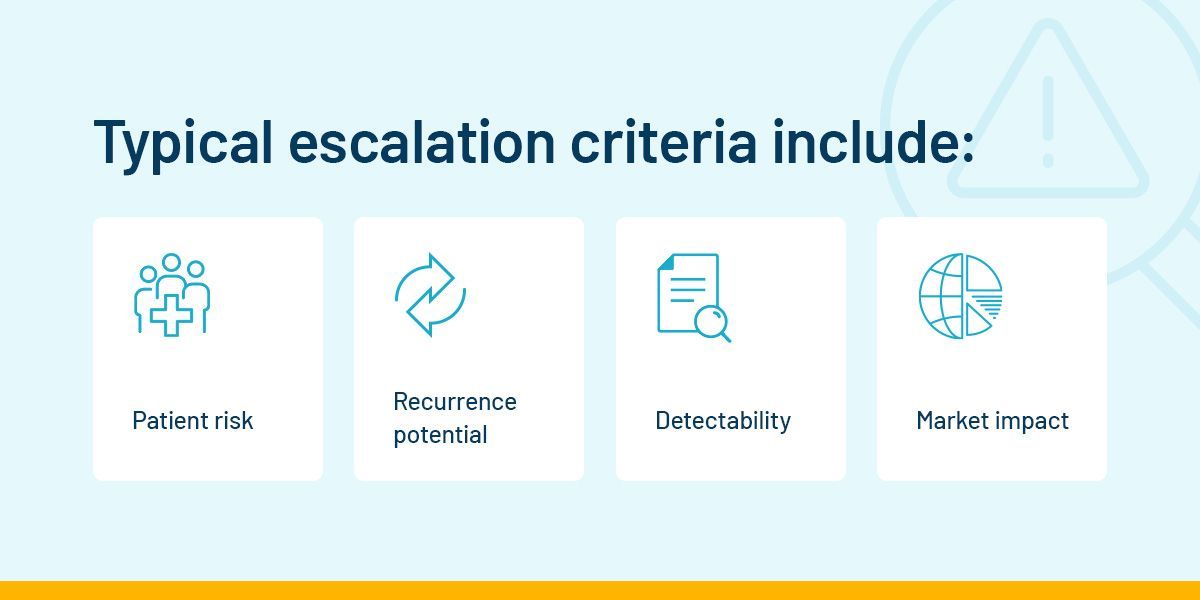
They also establish clear, risk-based escalation criteria before an event occurs. Typical escalation criteria include:
- Patient risk
- Recurrence potential
- Detectability
- Market impact
Before confirming scope, mature investigation teams also conduct historical review to identify recurrence patterns. This review covers:
- Prior deviations
- Customer complaints
- OOS and out-of-trend results
- Maintenance records and related CAPAs
An investigator needs to define scope, preserve evidence, test root-cause hypotheses honestly, assess product impact, and design a meaningful, predefined effectiveness check. Case studies based on an organization's own deviations, combined with facilitated cross-functional discussion, can be especially effective in developing this judgment.
It's also important to distinguish clearly between correction, corrective action, and preventive action. A correction is an immediate fix for a detected problem, addressing the symptom. Corrective action eliminates the root cause of a detected nonconformity to prevent its recurrence through systemic changes. In contrast, preventive action targets the cause of a potential issue, averting its occurrence.
This clear separation ensures immediate containment isn't mistaken for the deeper systemic remediation needed for sustained quality. When a CAPA results in changes to a process, method, equipment, facility, computerized system, procedure, or validated state, it becomes necessary to evaluate, approve, implement, and verify those changes through the organization's change-management system. ICH Q10 supports this relationship between CAPA and effective change management.
CAPA effectiveness checks close the loop by determining whether the actions were implemented as intended, reduced the identified risk, addressed the relevant causes, avoided unintended consequences, and prevented recurrence. Repeated human-error conclusions and CAPAs repeatedly extended beyond their original deadlines signal possible weaknesses in investigation quality, competency, resources, accountability, or management oversight.
When Is Retraining the Right CAPA?
Retraining is sometimes the right corrective action, as in when the investigation confirms a genuine knowledge or skills gap and no systemic contributors remain unaddressed. Our review of these warning letters points to the simple discipline of working through these questions before closing a CAPA with retraining:
- Was the procedure clear, current, and accurate for the conditions in which the work was performed?
- Did the employee have the tools, time, staffing, and conditions to follow the procedure correctly?
- Has this same failure occurred previously in this person, this role, or this process?
- Has the process been validated as capable under normal operating conditions?
- Has product risk been assessed for currently distributed batches?
- Have related batches, sites, and products been reviewed for the same failure mode?
When retraining is the right answer, measure effectiveness through demonstrated competency and monitor for recurrence over a predefined, risk-appropriate period. The assessment should include sufficient data and relevant performance indicators; the mere absence of another reported event may not, by itself, demonstrate effectiveness. The real test of deviation investigation training is whether it produces sustained improvement over time.
Develop Sustainable Investigation and CAPA Competency
Recurring deviations, repeated FDA observations, and ineffective CAPAs may indicate weaknesses extending beyond regulatory awareness. Investigation performance can also be affected by procedures, process design, equipment, data availability, staffing, supervision, Quality Unit oversight, and management decision-making.
Where a role-specific competency need is identified, CfPIE offers training in OOS investigations, root-cause analysis and CAPA, human-error prevention, quality risk management, and change control. Public and customized programs can support investigation-skill development, but training should be integrated with appropriate governance, resources, process improvements, qualification, observation, and monitoring of CAPA effectiveness.
Contact CfPIE at 610-708-2264 or info@cfpie.com to discuss individual or organizational training needs.

Blog Categories
Stay Informed